

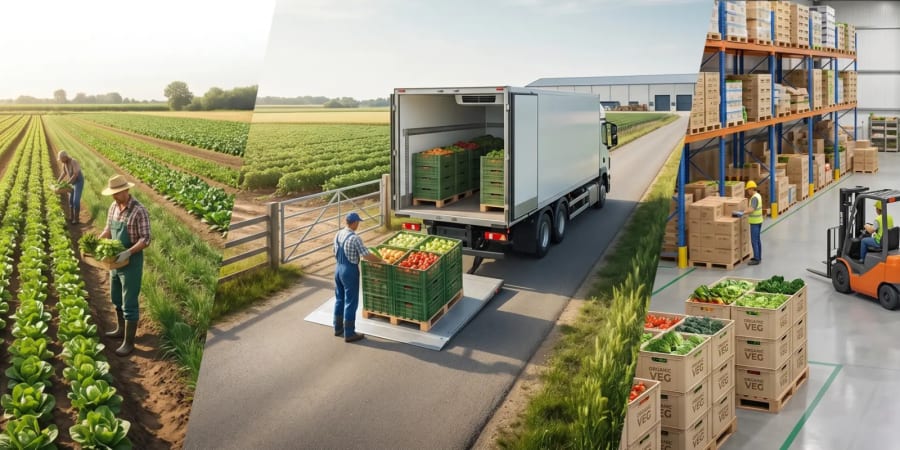
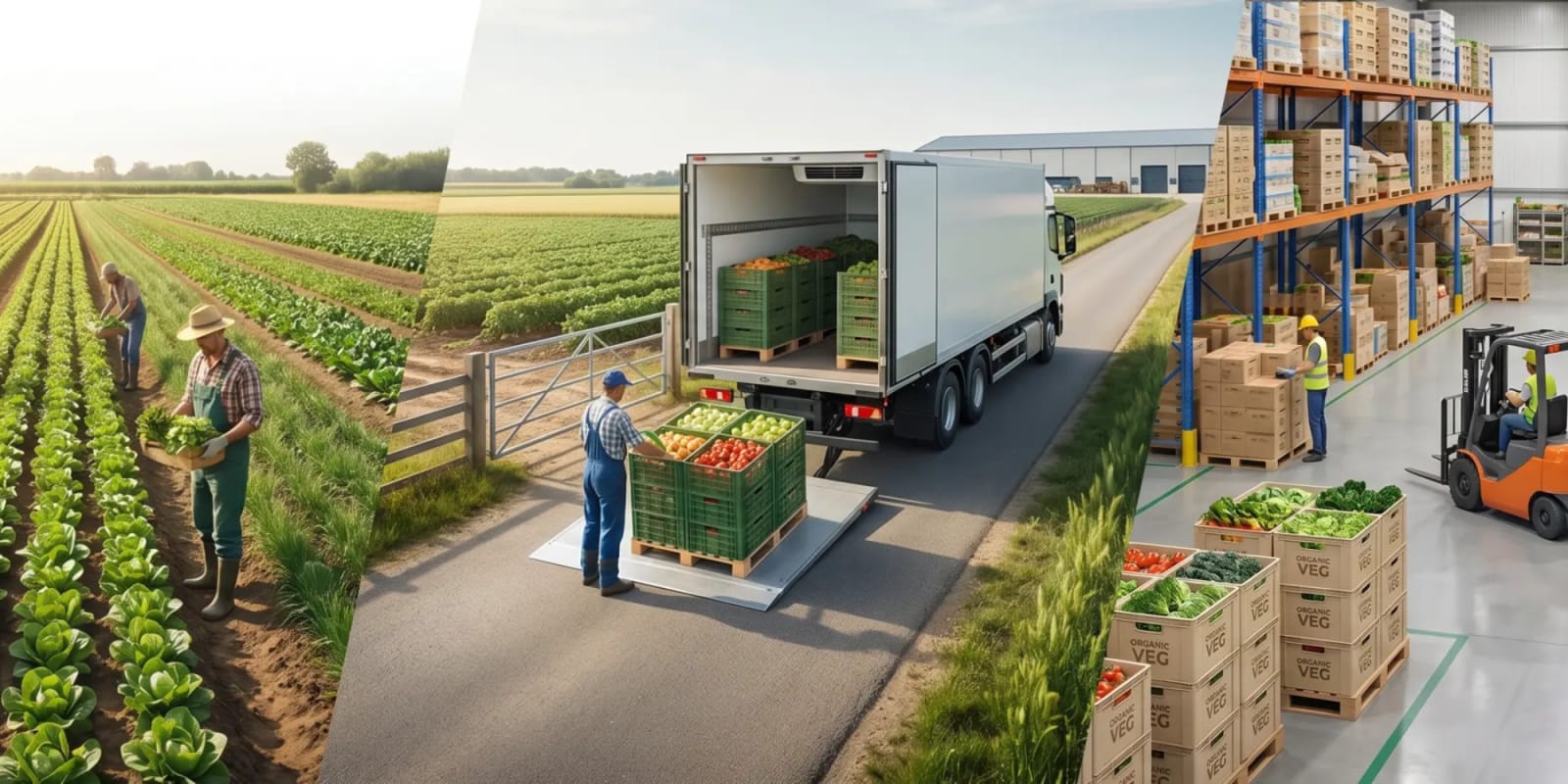
Explore how B2B food apps and agritech supply chain software can transform farmer-to-retailer crop trading through direct procurement, dynamic routing, digital weighing, cold-chain monitoring and automated agricultural marketplace workflows.
The agricultural supply chain across Southeast Asia faces significant fragmentation. In high-demand agrarian and retail corridors across Jakarta, Manila, Bangkok and other regional trading hubs, traditional fresh-produce distribution often depends on multiple intermediary layers.
These fragmented networks can increase procurement costs, create transportation inefficiencies and extend the time required for fresh produce to reach commercial retailers. For perishable agricultural products, additional handling and delays can also increase the risk of post-harvest losses.
A more connected approach is emerging through farm to fork logistics. By connecting farmers, procurement teams, logistics operators and retailers through a unified digital ecosystem, businesses can create more transparent and responsive agricultural supply chains.
Modern B2B food apps can go beyond basic ordering and delivery functions. With specialized agritech supply chain software, these platforms can support direct procurement, digital weighing, crop grading, dynamic routing, cold-chain monitoring and automated settlement.
Why B2B Food Apps Need to Evolve for Agricultural Supply Chains
Conventional B2B food delivery platforms are generally designed around predictable inventory, centralized warehouses, standardized SKUs and established delivery routes.
Agricultural supply chains operate differently. Crop availability, quality, weight, harvest timing and transportation conditions can change continuously.
A platform designed only for fixed warehouse inventory can struggle when dealing with variable farm-gate supply. Produce may be harvested at different times, arrive in different grades and experience weight changes during transportation.
This makes agricultural commerce an ideal use case for specialized agricultural marketplace software capable of connecting variable supply with real-time commercial demand.
How Farm to Fork Logistics Connects Farms Directly with Retailers
Farm to fork logistics focuses on creating a coordinated supply chain between agricultural producers and the businesses that ultimately purchase and distribute their products.
Instead of relying entirely on multiple physical intermediary stages, a digital platform can connect farm-level supply with retailer demand and coordinate procurement, quality verification, transportation and settlement.
A digitally connected workflow can look like this:
[Harvest Logged at Farm Gate]
│
▼
[Digital Weighing + Quality Data]
│
▼
[Dynamic Multi-Stop Routing]
│
▼
[Cross-Dock Sorting & Quality Verification]
│
▼
[Cold-Chain Transportation]
│
▼
[Retailer Delivery]
│
▼
[Automated Settlement & Payment]
This model allows agricultural supply chain participants to share information across procurement, logistics and retail operations while reducing unnecessary manual processes.
Core Technology Architecture for Farmer-to-Retailer Crop Trading
Building a scalable farmer-to-retailer crop trading platform requires more than a conventional food-ordering application. The technology architecture must account for variable agricultural inventory, rural connectivity, transportation constraints and product quality.
- Digital Farm-Gate Weighing Integration: Digital weighing systems can capture initial crop weights at collection points and transmit measurement data to the central platform through appropriate APIs or connected devices.
- Dynamic Multi-Stop Routing: Logistics software can consolidate agricultural loads from multiple farms and optimize transportation routes based on supply availability, destination demand, vehicle capacity and delivery constraints.
- Cold-Chain Telemetry: IoT temperature sensors can provide relevant vehicle or storage telemetry to help logistics operators monitor temperature-sensitive agricultural products during transportation.
- Automated Crop Grading: The platform can capture crop quality and grading information at collection or inspection points, allowing commercial buyers to make procurement decisions using structured product data.
- Digital Procurement Management: Retailers can place purchase requirements while procurement teams match demand against available harvest quantities, grades and delivery windows.
Digital Weighing and Grade-Based Pricing for Crop Trading
Agricultural products can experience changes in weight and quality between farm collection and final delivery. For this reason, conventional fixed-SKU inventory models may not be sufficient for agricultural marketplaces.
Crop trading software can integrate digital weighing information with quality and grading data to create a more accurate commercial record for each agricultural batch.
A grade-based pricing engine can support different commercial categories based on factors such as size, quality, weight, freshness or buyer-specific requirements.
This creates a structured digital record from farm collection through retailer delivery and can reduce dependence on disconnected manual records.
Dynamic Routing and Cold-Chain Logistics for Fresh Produce
Transportation is one of the most important components of farm to fork logistics. Agricultural products often originate from geographically distributed farms rather than centralized warehouses.
A modern logistics engine can combine multiple farm collections into optimized routes while considering vehicle capacity, delivery priorities, road conditions and retailer requirements.
For temperature-sensitive products, cold-chain logistics can be supported through connected sensors and telemetry systems. Relevant temperature information can be transmitted to the logistics platform, enabling operators to identify potential exceptions during transportation.
Combining route optimization with cold-chain monitoring can help agricultural businesses create more responsive and traceable distribution workflows.
Offline-First Agritech Software for Rural Supply Networks
Rural agricultural environments may have inconsistent mobile or internet connectivity. A digital agriculture platform therefore needs to remain functional even when field agents temporarily lose network access.
An offline-first architecture can allow users to capture farm, harvest, weighing and grading information locally before synchronizing the information when connectivity becomes available.
Technologies such as SQLite or IndexedDB can be considered for local data persistence depending on the application architecture, platform requirements and security model.
Reliable synchronization logic is particularly important because the platform must handle conflicts, duplicate transactions and incomplete uploads when devices reconnect.
Strategic Benefits of Re-Engineered B2B Food Apps
Deploying specialized B2B food apps for agricultural procurement can create several strategic opportunities for retailers, distributors and logistics operators.
- More Direct Procurement: Digital platforms can connect commercial buyers more directly with agricultural supply networks.
- Improved Supply Visibility: Retailers can gain better visibility into available harvest volumes, grades and expected delivery windows.
- Reduced Manual Processes: Digital weighing, grading, procurement and logistics workflows can reduce dependence on disconnected spreadsheets and paperwork.
- Better Logistics Coordination: Dynamic routing and transportation telemetry can help operators coordinate distributed agricultural collections.
- Improved Traceability: Digital batch and transaction records can provide greater visibility across procurement and distribution workflows.
Planning an Agritech Supply Chain Platform?
Next Code Company can help businesses design and develop e-commerce, logistics, agritech and marketplace software tailored to complex supply-chain requirements.
The Future of Agricultural Marketplace Software in APAC
As food distribution networks continue to digitize across APAC, businesses will increasingly require technology that connects agricultural production, procurement, logistics and retail demand.
The next generation of agritech supply chain software is likely to focus on real-time supply visibility, connected logistics, digital procurement, data-driven pricing and stronger traceability.
Platforms that combine mobile applications, APIs, IoT devices, logistics systems and agricultural marketplace functionality can create a more connected digital infrastructure for food distribution.
For businesses operating across multiple regions, scalable architecture will also be important for supporting different crops, markets, currencies, languages, logistics networks and regulatory requirements.
Frequently Asked Questions About Farmer-to-Retailer Crop Trading
How does the platform handle crop weight changes during transit?
The platform can record the initial farm-gate weight and compare it with subsequent warehouse or retailer intake measurements. Configured business rules can then calculate allowable weight variations and update applicable transaction or invoicing records.
Can an agritech supply chain platform operate in areas with poor connectivity?
Yes. An offline-first application can allow field users to capture harvest, weighing, grading and procurement data locally. Once connectivity is restored, securely designed synchronization processes can upload the stored transactions to the central platform.
How can digital platforms support secure agricultural payments?
Agricultural marketplaces can integrate suitable payment gateways or financial APIs to manage digital settlements. Payment workflows can be linked to verified transaction, delivery and quality records, subject to the applicable financial, contractual and regulatory requirements.
Can B2B food apps connect farmers directly with supermarkets?
Yes. A B2B food marketplace can connect verified agricultural suppliers with commercial buyers such as supermarkets, restaurants, distributors and food-service businesses. Procurement workflows can be configured around crop type, grade, quantity, price and delivery requirements.
What technologies can be used to build agricultural supply chain software?
Depending on project requirements, an agricultural supply chain platform can combine web and mobile applications, cloud infrastructure, APIs, databases, IoT sensors, mapping and routing services, payment integrations, analytics and offline-first data synchronization.
Conclusion: Building a More Connected Farm to Fork Supply Chain
Farmer-to-retailer crop trading requires technology capable of handling the unique characteristics of agricultural supply, including variable harvest volumes, changing product quality, distributed farm locations and time-sensitive transportation.
Modern B2B food apps can evolve beyond basic ordering platforms by integrating digital weighing, crop grading, dynamic routing, cold-chain telemetry, offline-first workflows and digital procurement capabilities.
The combination of agritech supply chain software and farm to fork logistics can create a more connected digital ecosystem between farmers, logistics operators, distributors and retailers.
For businesses planning to build an agricultural marketplace, crop-trading platform or digital supply chain solution, selecting a scalable technology architecture is essential for supporting future growth.